Reflections From the 2026 International Migration Review Forum (IMRF)
May 28, 2026
Amelie Resendiz
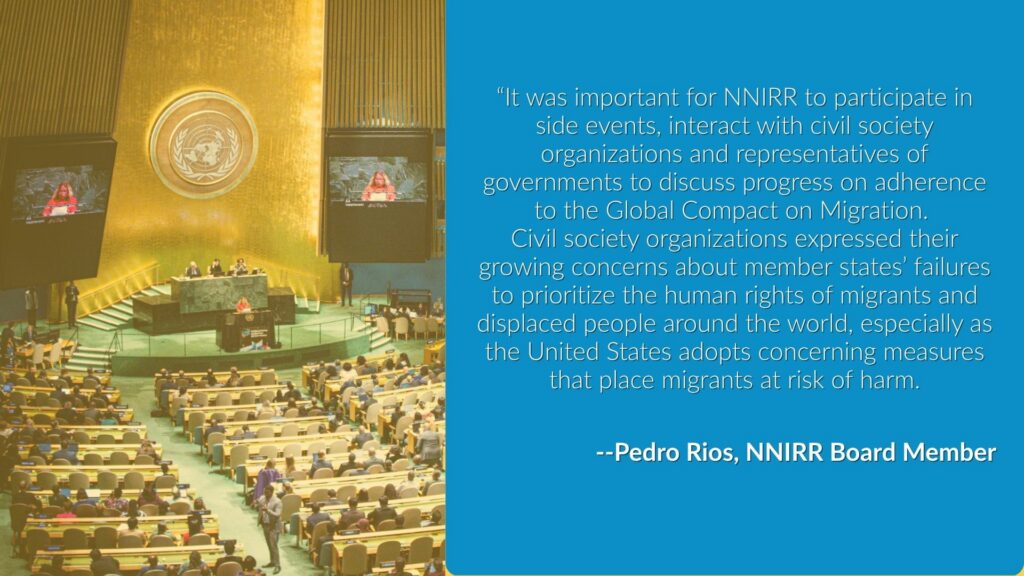
NNIRR joined civil society, advocates, and governments from around the world in early May at the 2026 International Migration Review Forum (IMRF) at the United Nations in New York City. The convening assessed progress on the Global Compact for Safe, Orderly and Regular Migration (GCM) (that NNIRR helped shape, nearly a decade ago) and discussed the future of global migration governance amid issues of inequality, displacement, climate crises, and political violence.
NNIRR attended many ‘side events’ organized by civil society organizations from around the world. In many ways, the side events were more educational and impactful than the forum itself.
The U.S. Response
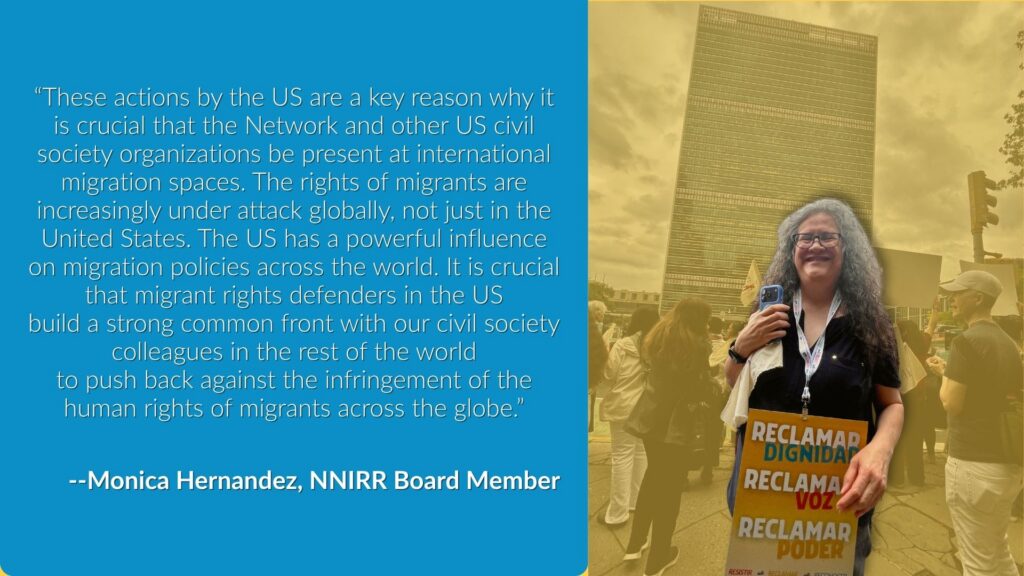
Not only was the United States absent from the proceedings, it issued a statement steeped in white supremacist language accusing the United Nations of “. . . facilitating replacement immigration in the United States and across the broader West” and that the UN “. . . did not just facilitate the invasion of our country, but proceeded to redistribute our own people’s wealth and resources to millions of foreigners from the worst corners of the world. . . . Our goal is not to ‘manage’ migration, but to foster remigration.”
Human Rights Must Remain Central
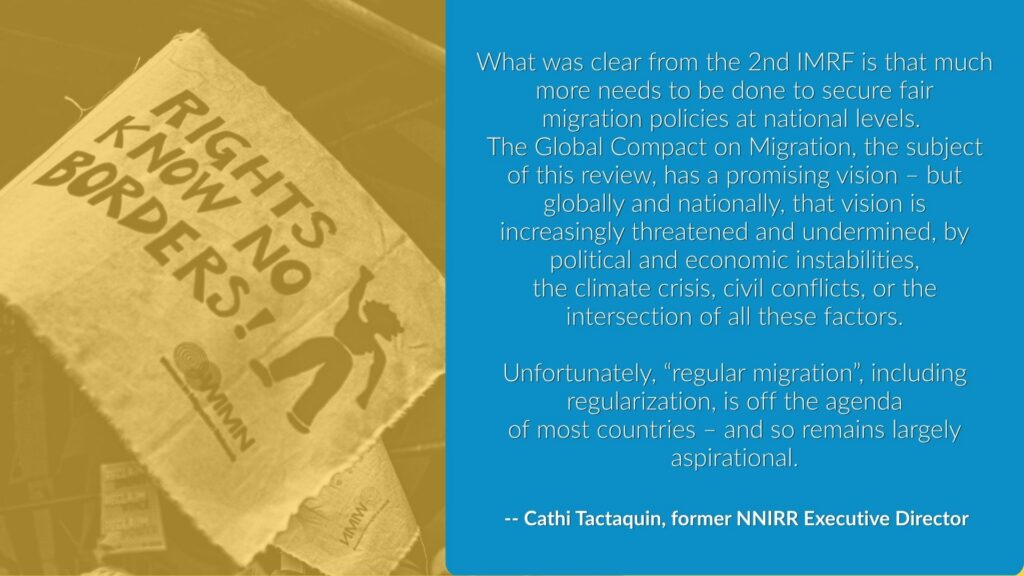
In reality, as the IMRF discussed throughout the gathering, “…migration is shaped by war, economic inequality, labor exploitation, climate displacement, and global systems that no country can be addressed in isolation.
NNIRR continues to embrace the principle embedded in the Progress Declaration adopted by the IMRF on May 8, 2026, that states: “…all migrants, regardless of their migration status, are human rights holders, and reaffirm the need to protect their safety and dignity, and the overarching obligation to respect, protect and fulfill the human rights and fundamental freedoms of all migrants, regardless of their migration status, without any kind of discrimination, while promoting the security, well-being and prosperity of all our communities.”
We continue to work alongside local, national and global partners to defend migrant rights and advance migration policies rooted in dignity, justice, and human rights, as we also resist racist, anti-immigrant narratives and inhumane policies.